
Unveiling Roofing Insights: 2024
How Much Does It Cost to Replace a Roof?
Delving into the financial aspect, the average cost to replace a roof stands at $9,191.
Why Are Roofs Replaced?
Understanding the motivations behind roof replacements sheds light on the necessity and factors driving this significant home investment.
How Many Roofs Are Replaced Each Year?
Examining the annual frequency of roof replacements in the United States provides a comprehensive view of the ongoing maintenance and upgrade requirements.
What Are the Most Common Types of Roofs?
Discovering the predominant roof types unveils the diverse architectural choices homeowners make, with asphalt shingles leading the way in approximately 75% of roofing projects.
How Long Does a Roof Last?
The durability of roofs varies, with an average lifespan ranging from 25 to 50 years, influenced by factors such as roof type and material quality.
Roofer Demographics
Gaining insights into the demographics of roofing professionals offers a glimpse into the workforce shaping the roofing industry.
Key Takeaways from Roofing Statistics
- Asphalt Shingles emerge as the predominant roofing material, dominating around 75% of projects.
- The average roof lifespan spans between 25 and 50 years, contingent on the type of roof and the quality of materials used.
- The average cost to replace a roof stands at $9,191.
This exploration of key roofing statistics aims to provide a comprehensive understanding of the crucial elements shaping the roofing landscape. Whether you're a homeowner contemplating a roof replacement or a roofing professional navigating the industry, these insights offer valuable perspectives on the state of residential roofing.
Approximately 5 million roofs find their place each year, a testament to the perpetual evolution of residential structures.
The roofing industry in the United States boasts an estimated 131,980 roofers, contributing significantly to the maintenance and enhancement of housing infrastructures.
In the year 2022, the national median wage for roofers stood at $47,920, reflecting the skilled labor required for this vital profession.
Unraveling the Cost of Roof Replacement
How Much Does It Cost to Replace a Roof?
The average expenditure for roof replacement hovers around $9,191. This figure encompasses a range of costs, spanning from $5,000 to $15,000. Notably, some premium options can escalate to a noteworthy $80,000.
Factors Influencing Roof Replacement Costs
Understanding the variables impacting roof replacement costs is crucial for homeowners contemplating this significant investment. These factors include:
- Roof Size and Complexity: The dimensions and intricacy of the roof play a pivotal role in cost determination.
- Material: The choice of roofing material is a major cost influencer, with options ranging from economical to premium selections.
- Removal of the Existing Roof: The process of removing the existing roof adds to the overall cost, considering labor and disposal expenses.
- Labor Costs: Skilled labor is a substantial component, with costs varying based on the complexity of the job.
- Roof Pitch and Accessibility: The pitch and accessibility of the roof impact the overall complexity of the project and, consequently, the cost.
- Underlayment and Ventilation: Ensuring proper underlayment and ventilation contributes to the longevity and efficiency of the new roof, influencing costs.
- Contractor Reputation and Quality: The reputation and quality of the contractor engaged in the project also play a role in cost considerations.
- Warranty: The inclusion of a warranty can affect costs, providing assurance and potential cost savings in the long run.
Roofing Material Costs
The choice of roofing material significantly determines the overall expense. Prices for installation per square foot can range from $4 to $40, covering materials and labor. Considering the average roof size in America, approximately 1700 square feet, homeowners may anticipate costs ranging from $6,800 to $68,000, contingent on various factors.
Price Ranges per Square Foot for Different Materials (Including Installation):
- Asphalt Shingles: $4 - $8
- Metal: $9 - $20
- Wood Shake: $10 - $30
- Slate: $15 - $40
Understanding these cost dynamics empowers homeowners to make informed decisions about roof replacement, ensuring a balance between budget considerations and the longevity of the investment.
|
Roofing Material |
Cost/Sq.Ft. |
|
Aluminum shingles |
$8.50–$13.75 |
|
Architectural/premium asphalt shingles |
$4.50–$8.25 |
|
Basic asphalt shingles |
$4.25–$4.95 |
|
Cedar shingles or shakes |
$8–$14.30 |
|
Clay tiles |
$12–$24.75 |
|
Concrete tiles |
$11–$19.80 |
|
Copper tiles |
$21–$39.70 |
|
Corrugated metal |
$5.50–$11.50 |
|
Flat roofing materials (rubber, PVC, etc.) |
$5.50–$7.50 |
|
Slate tiles |
$12–$22 |
|
Standing seam metal panels |
$10–$17.05 |
|
Steel shingles |
$8–$12.65 |
|
Zinc tiles |
$18–$28 |
Individuals opting to replace their roofs independently can typically achieve a cost-saving of approximately 50% of the total expense. However, DIY enthusiasts are susceptible to errors.
Unveiling the Reasons Behind Roof Replacements
Why Are Roofs Replaced?
Understanding the motives driving roof replacements provides insights into the primary concerns of homeowners:
- Leaking: A significant 33% of homeowners opt for roof replacements due to the presence of leaks.
- Storm Damage: Another 33% decide on roof replacements as a response to damage caused by storms.
- Anticipation of Roof Failure: 25% of homeowners replace their roofs in anticipation of imminent failure.
- Enhancing Appearance: A smaller percentage, 3%, invest in roof replacements to enhance the visual appeal of their homes.
Examining the Annual Landscape of Roof Replacements
How Many Roofs Are Replaced Each Year?
The demand for new roofs remains constant, driven by aging existing buildings. The annual landscape of roof replacements includes:
- 5 Million New Roofs: A substantial number of new roofs, totaling 5 million, are installed each year.
- 85% Replacement Dominance: A remarkable 85% of the roofing business in the U.S. is characterized by the replacement of roofs on existing homes.
- Market Value: In 2022, the U.S. roofing market achieved a substantial value of $21.9 billion.
- Projected Growth: The roofing industry is expected to experience steady growth, with an anticipated annual increase between 5% and 7% in the coming years.
Unveiling the Dominant Roof Types
What Are the Most Common Types of Roofs?
Asphalt shingle roofs reign supreme as the most prevalent type in the U.S., constituting approximately 3 out of 4 roofing projects. Within the realm of asphalt shingle roofs, two prominent types dominate:
- Three-Tab Roofs (42%): A significant portion, 42%, is represented by three-tab asphalt shingle roofs.
- Architectural Roofs (33%): The architectural variant holds a substantial share, accounting for 33% of all asphalt shingle roofs.
Breakdown of Common Roof Types in the U.S.
- Asphalt Shingle Roofs: 75%
- Three-Tab: 42%
- Architectural: 33%
Understanding these dynamics provides valuable insights into the motivations, trends, and preferences shaping the landscape of roof replacements in the U.S.
Architectural shingles tend to be more popular with new homes while three-tab roofs are the most popular choice for replacements.
Metal roofs have gradually become more popular over time, but still only account for roughly 1 in 10 roofing projects.
How Long Does a Roof Last?
The average lifespan of a roof is 25 and 50 years.
The longevity of a roof depends on its type and quality. Thus, the average roof being replaced was slightly over 19 years old.
Here are the average life spans of roofs based on materials:
|
Roof Type |
Lifespan |
|
Asphalt (three-tab) shingles |
10–15 years |
|
Asphalt (architectural) shingles |
30–50 years |
|
Metal roofing |
20–50 years |
|
Concrete and clay tiles |
50+ years |
|
Plastic composite |
40–50 years |
|
Slate tiles |
50+ years |
Additional Factors Affecting Roof Durability
Beyond the choice of material, various elements play a pivotal role in determining the lifespan of a roof.
Workmanship:
The proficiency of installation, executed by seasoned professionals, is paramount for a roof's endurance. The underlayment, acting as the waterproof layer beneath the surface, is crucial for shielding the interior from external damage.
Climate and Weather:
Local climate nuances, encompassing temperature variations, precipitation levels, and exposure to sunlight, can significantly influence a roof's longevity. In sunnier regions, light-colored roofs are advantageous as they absorb less heat, minimizing wear and tear.
Maintenance:
Regular upkeep, including gutter cleaning, debris removal, and prompt addressing of minor repairs, contributes substantially to extending a roof's lifespan.
Ventilation:
A well-ventilated attic plays a vital role in regulating temperature and humidity, alleviating stress on the roof and enhancing its overall longevity.
Roof Pitch:
Steeper roof pitches facilitate more efficient shedding of water and snow, potentially prolonging the roof's life.
Exposure to Trees and Debris:
Overhanging branches and falling debris over time can pose threats to a roof, impacting its structural integrity.
Roofer Demographics
In the expansive roofing profession, an array of demographic insights provides a glimpse into the makeup of the workforce.
- Gender Distribution: A significant 97.9% of roofers identify as male.
- Ethnic Composition: Among roofers, 56.8% are white, followed by 28.9% Hispanic, and 8.3% black.
- Age Distribution: The majority of roofers, 61%, fall within the age bracket of 20 to 40, with 37% being over 40.
- Educational Background: A diverse educational background is noted, with 28% holding high school diplomas, 28% possessing associate degrees, and 25% having bachelor's degrees.
- Experience Levels: Only 12% of roofers boast 11 years or more in the industry.
- Employment Statistics: Approximately two-thirds of roofers work for companies with 50 to 500 employees, while 16% are employed by smaller companies with fewer than 50 employees.
With asphalt shingles dominating about 75% of roofing projects in the U.S. and an annual installation of approximately 5 million roofs, the roofing industry stands as a substantial facet of the construction sector.
Considering an average roof replacement cost of $9,191 and a typical lifespan ranging from 25 to 50 years, this comprehensive roundup of roofing statistics aims to provide valuable insights for both homeowners and industry professionals alike.
National estimates for Roofers:
Employment estimate and mean wage estimates for Roofers:
|
Employment (1) |
Employment RSE (3) |
Mean hourly wage |
Mean annual wage (2) |
Wage RSE (3) |
|
131,980 |
1.0 % |
$ 24.96 |
$ 51,910 |
0.7 % |
Percentile wage estimates for Roofers:
|
Percentile |
10% |
25% |
50% (Median) |
75% |
90% |
|
Hourly Wage |
$ 15.13 |
$ 18.38 |
$ 23.04 |
$ 29.06 |
$ 36.51 |
|
Annual Wage (2) |
$ 31,470 |
$ 38,230 |
$ 47,920 |
$ 60,430 |
$ 75,930 |
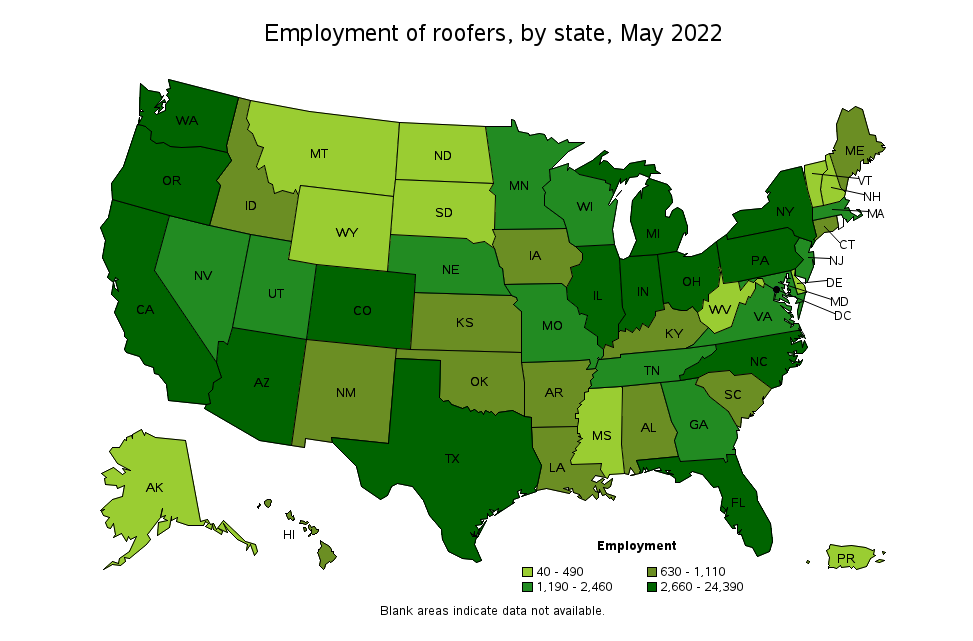
States with the highest employment level in Roofers:
|
State |
Employment (1) |
Employment per thousand jobs |
Location quotient (9) |
Hourly mean wage |
Annual mean wage (2) |
|
24,390 |
2.65 |
2.97 |
$ 20.37 |
$ 42,370 |
|
|
18,220 |
1.03 |
1.16 |
$ 31.71 |
$ 65,960 |
|
|
6,160 |
0.47 |
0.53 |
$ 20.20 |
$ 42,010 |
|
|
5,940 |
1.01 |
1.13 |
$ 32.80 |
$ 68,220 |
|
|
5,500 |
1.61 |
1.81 |
$ 30.17 |
$ 62,740 |
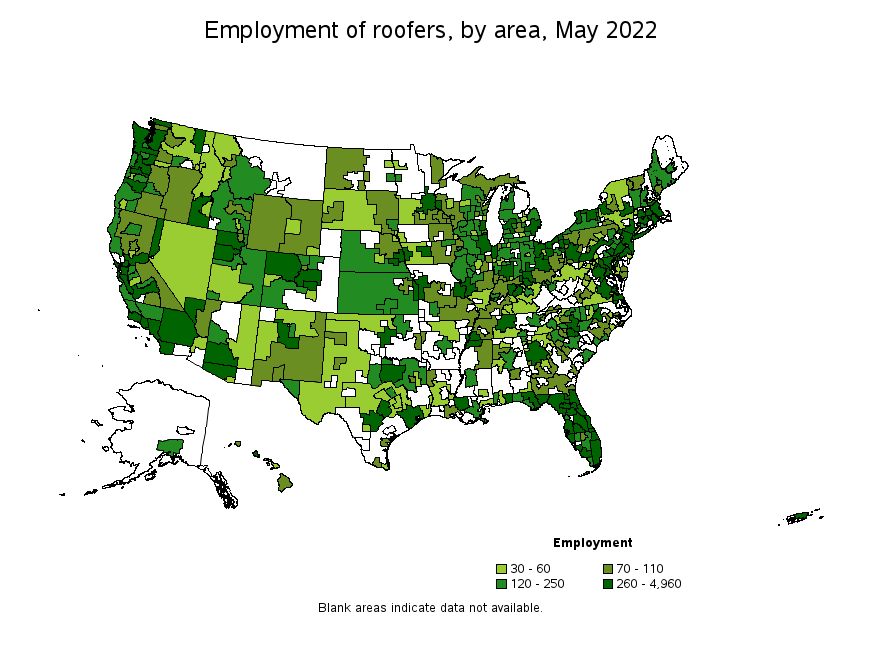
Metropolitan areas with the highest employment level in Roofers:
|
Metropolitan area |
Employment (1) |
Employment per thousand jobs |
Location quotient (9) |
Hourly mean wage |
Annual mean wage (2) |
|
4,960 |
1.89 |
2.12 |
$ 21.44 |
$ 44,600 |
|
|
4,880 |
0.80 |
0.90 |
$ 32.18 |
$ 66,930 |
|
|
4,450 |
1.01 |
1.13 |
$ 33.76 |
$ 70,230 |
|
|
3,390 |
0.37 |
0.41 |
$ 30.68 |
$ 63,810 |
|
|
3,370 |
2.60 |
2.91 |
$ 20.30 |
$ 42,230 |
|
|
3,230 |
2.37 |
2.65 |
$ 20.38 |
$ 42,400 |
|
|
2,970 |
1.46 |
1.63 |
$ 31.92 |
$ 66,390 |
|
|
2,900 |
1.30 |
1.46 |
$ 23.35 |
$ 48,580 |
|
|
2,380 |
0.63 |
0.70 |
$ 21.03 |
$ 43,750 |
|
|
2,260 |
0.95 |
1.06 |
$ 35.54 |
$ 73,920 |
5 Roofing Styles to Complement Your Victorian Home
Victorian homes are renowned for their detailed exteriors, ornate architectural features, and steep roofs. Selecting the right roof for your Victorian home is a nuanced task, as the roofing style should harmonize rather than clash with the overall design of the home. A well-chosen roof not only enhances the aesthetics of your residence but also provides protection against adverse weather conditions. This blog post delves into five roofing styles that perfectly match your Victorian home.
1. Mansard Roof
The Mansard roof, also referred to as a French roof, is characterized by four steeply pitched sides. The lower slope is steeper than the upper slope, creating ample space in the attic for living purposes. Popularized during the 19th-century Second Empire era, this style is now closely associated with Victorian homes. Suitable for both large and small residences, the decorative shapes of the Mansard roof impart a stunning and grand finishing touch to your home.
2. Gambrel Roof
Featuring two slopes on both sides, with the bottom slope being steeper than the upper slope, the Gambrel roof was widely used in 1700s barns and agricultural buildings. It later became a favored style for Victorian residential homes, adding a touch of rustic charm. The Gambrel roof can accommodate dormers, providing additional natural light. Consult with roofing professionals, such as Wortham Brothers Roofing, to explore unique roofing styles like this.
3. Gabled Roof
A gabled roof, also known as a pitched or peaked roof, consists of two sloping sides meeting in the middle to form a peak or ridge. This Victorian roofing style suits residences of varying sizes, with the triangular shape of the gable offering ideal headroom or extra storage space. Customization options abound, allowing homeowners to add decorative elements like gingerbread trim or spires.
4. Hipped Roof
The Hipped roof features four sloping sides that converge at the peak, each side having the same pitch and reaching down to the eaves line. Offering excellent protection against extreme weather, this aesthetically pleasing style is particularly well-suited for homes with a square or rectangular plan, providing a sense of symmetry. The Hipped roof can be personalized with various materials, including metal, shingle, or slate.
5. Slate Roof
An upscale choice, a slate roof can add elegance and style to your Victorian home. Crafted from natural rock, this roofing option is durable and low-maintenance, renowned for its longevity and fire resistance. While it may be a pricier option, it represents a long-term investment that can elevate your home's value.
Final Thoughts on Roofing for Victorian Homes
Selecting a roofing style that complements your Victorian home is crucial for maintaining design integrity and adding value to your property. The Mansard, Gambrel, Gabled, and Hipped roofs are all popular options that suit Victorian architecture. These roofs offer customization opportunities, allowing incorporation of decorative elements that complement your home's design. Additionally, the slate roof, though expensive, is an elegant choice for homeowners seeking to infuse luxury into their residences. Conduct thorough research, collaborate with roofing professionals, and choose the roofing style that aligns with your needs while enhancing your home's beauty.
In unraveling the complexities of roofing, our exploration of key insights into the roofing landscape in 2024 has provided a comprehensive understanding of the crucial elements shaping this dynamic industry. From the average cost of roof replacement and motivations behind replacements to the common types of roofs and their lifespans, this overview serves as a valuable resource for both homeowners and industry professionals. Whether you're contemplating a roof replacement or navigating the roofing profession, these insights offer a nuanced perspective on the state of residential roofing.
 MLS #: 11933746



Post a Comment