
Ultimate Guide to Mastering New Construction Home Purchases
Introduction
In the fast-paced real estate market, the allure of a new construction home is undeniable. The fresh scent of paint, untouched countertops, and the promise of modern amenities are enticing. At [Your Company Name], we understand the significance of this investment and have crafted the ultimate guide to empower you in making informed decisions.
Understanding the Advantages
1. Cutting-Edge Design and Technology
Newly constructed homes often boast the latest in architectural design and technological advancements. From energy-efficient appliances to smart home integration, these properties redefine modern living.
2. Customization Opportunities
Unlike existing homes, new constructions often provide the chance to personalize your space. Tailor everything from flooring to fixtures, ensuring your home is a true reflection of your taste and lifestyle.
3. Energy Efficiency and Cost Savings
In an era focused on sustainability, new homes adhere to stringent energy efficiency standards. This not only reduces your carbon footprint but also translates into long-term cost savings on utility bills.
Navigating the Construction Process
4. Choosing the Right Builder
Selecting a reputable builder is paramount. Investigate their portfolio, read reviews, and visit completed projects. A trustworthy builder ensures a seamless construction journey.
5. Understanding the Contract
Delve into the details of the construction contract. Clarify payment schedules, timelines, and warranties. A transparent contract safeguards your interests throughout the construction process.
6. Inspecting the Construction Site
Regular site visits allow you to monitor the progress and address any concerns promptly. This hands-on approach ensures that the final product aligns with your expectations.
Financing Your New Home
7. Securing a Mortgage for New Construction
Navigating the financing of a new construction home requires a strategic approach. Work closely with your lender to secure a mortgage that accommodates the unique aspects of the construction process.
8. Contingency Planning
Unforeseen challenges may arise during construction. Establish a financial contingency plan to address unexpected expenses, providing a safety net for any surprises that may occur.
Post-Construction Considerations
9. Final Inspections and Walkthroughs
Thoroughly inspect your new home before finalizing the purchase. Identify any discrepancies and ensure the builder addresses them before closing the deal.
10. Settling into Your New Home
Once the keys are in hand, it's time to settle into your new abode. Familiarize yourself with the home's features, update security systems, and make it truly yours.
In the realm of embarking on the homebuying journey, neophyte property acquirers might instinctively recoil from the prospect of procuring a pristine residence. Fears abound: that it would entail exorbitant costs or protracted timelines. While delving into new constructions indeed diverges from the acquisition of pre-owned properties, a myriad of misconceptions shrouds the domain of new builds. Consequently, prospective homeowners, influenced by these misconceptions, might inadvertently bypass a sagacious avenue to property ownership—a trajectory increasingly pertinent in contemporary American realities.
In essence, within a housing milieu besieged by constrained inventory, potential homebuyers cannot afford to dismiss the prospect of new-construction homes. Such dismissal should not occur merely due to lingering fallacies. With this perspective, we aim to dispel prevalent misconceptions surrounding new-construction homes—myths resilient against facile debunking.
Myth: New Construction Homes are Financially Daunting
Acknowledged, new-construction homes may ostensibly bear higher initial costs. However, this financial facet only unveils a fraction of the panorama. Crucially, a new-construction home features a pristine roof, appliances, HVAC apparatus, and pivotal systems, obviating the need for imminent repairs or replacements. While the upfront cost may seem elevated, the prospective buyer is spared from the financial outlay associated with upgrading or aligning elements of a pre-owned abode, potentially translating to substantial savings, stretching into tens of thousands of dollars.
Myth: Prolonged Wait Times for Occupancy
Granted, the construction timeline for new-construction homes averages around 6.5 months from inception. However, this temporal span does not rigidly dictate the move-in duration.
Builders often commence construction well in advance of securing a buyer, resulting in "spec homes" where construction may be significantly underway or even finalized before a deal materializes. For those averse to waiting, exploring available spec homes becomes a viable option.
It is prudent, though, to consider the variability in build times, especially amid contemporary challenges in the supply chain. Factors influencing construction timelines encompass labor and material availability, alongside municipal permit processing times. Thus, prospective buyers should inquire about expected completion dates and contingencies in case of delays.
Myth: Financing New Construction Homes is Arduous
Contrary to perception, securing financing for new-construction homes tends to be more streamlined. Builder incentives and the appeal of acquiring something novel, translating to diminished risk, often simplify the financing process. Moreover, title companies collaborating with builders often conduct collective title searches for new parcels within a community, expediting the buyer's journey to the closing table. Larger national builders typically offer affiliated lending entities, providing incentives to engage with in-house financing. Even if a buyer secures a superior deal externally, builder lenders are inclined to match or surpass it, aiming to retain business continuity.
For smaller builders without affiliated lenders, collaboration with local mortgage brokers facilitates buyers in securing loans.
Myth: Depreciation of New Homes Exceeds Pre-Existing Properties
While the adage holds true for new cars depreciating rapidly post-purchase, the inverse unfolds in the realm of new homes. In actuality, numerous new-construction homes witness appreciable value escalation even before occupancy.
Myth: Inspection is Impossible Before Purchase
Contrary to misconceptions, scrutinizing a new-construction home before acquisition is not only feasible but advisable. Buyers opting for new-construction homes can conduct periodic inspections throughout the construction phase, affording them and their inspectors deeper insights into the home's condition. This spans plumbing, electrical, and HVAC systems concealed within walls, insulation, and more, surpassing the insights gleaned from inspecting a completed home.
Municipalities rigorously inspect new-construction homes at various stages, culminating in a certificate of occupancy before habitation. Additionally, buyers partake in a pre-possession walk-through, offering ample opportunities to assess the new dwelling comprehensively.
Myth: New-Construction Homes Lack Character
Subjectivity governs the perception of character. The novelty of a structure does not preclude it from embodying desired features.
"Individuals can opt for or integrate diverse features based on their financial capacities," asserts Charles Chadwick Jr., Federal Construction and Security Contractor. "I've witnessed subdivisions where residences sported vinyl siding exclusively, while others incorporated additional brick or stone elements alongside vinyl siding."
Transient trends notwithstanding, new-construction homes often epitomize contemporary design. In contrast, aging homes encounter challenges in exterior aesthetics.
Myth: Homogeneity in New-Construction Homes
"Builder practices delineate the extent of customization. Some adhere to pre-specified specifications in "spec homes," limiting consumer choices, while others permit a plethora of selections or upgrades in planned constructions. To discern the builder's modus operandi, perusing builder reviews proves invaluable before contractual commitments.
Myth: Compromised Quality in New Construction
The age-old adage asserting a degradation in construction quality does not hold sway when considering new-construction homes. Fundamental construction principles remain consistent across house types.
Myth: Real Estate Agents are Dispensable for New Construction Purchases
Technically accurate, a real estate agent is not mandatory for many new-construction deals. Yet, prudence suggests having dedicated representation. Akin to conventional real estate transactions, opportunities for negotiations on pricing, contract terms, add-ons, completion dates, and other incentives persist in new-construction dealings. Engaging a real estate agent aids in navigating these negotiations, ensuring optimal deal structures.
The discourse surrounding new-construction homes unveils a realm replete with opportunities often obscured by unfounded myths. Dismantling these misconceptions opens avenues for informed decisions in the pursuit of homeownership.
Terms You need to Know
For homebuyers venturing into the world of new-construction homes for the first time, it might seem like everyone around them is speaking in a code they can’t understand.
What the heck is a plat, and how is it different from a plot? Why is a CO and CC&Rs so important, anyway?
While these terms are everyday lingo for builders and real estate agents who deal with new construction regularly, first-time homebuyers might find them mystifying at first.
To help you approach this market as an educated consumer, we’ve put together an alphabetized primer of some common terms you might hear when shopping for new construction. Consider this an important step to help you navigate your way to a great deal on a brand-new home.
Allowance
An allowance is a specific amount of money set aside in a new-construction contract by the builder for items that the homebuyer may select themselves. The items could include flooring, light fixtures, kitchen backsplashes, bathroom tiles, and more. An allowance allows buyers to choose from a variety of options to personalize their home. Just be aware that if you spend your whole allowance, anything else you add becomes an upgrade, which will cost you extra. So as Mom and Dad always said, it’s best to stick to your allowance if saving money is a priority for you.
Certificate of occupancy (CO)
A CO is a legal document issued by a local municipality certifying that a home is safe and ready for occupancy.
This is an important certificate that will be issued once a home has successfully passed all required inspections and meets the area’s building codes. (The codes are rules set by the local or state government regulating how a house can be built.)
Change order
A change order is an amendment to the original contract or work order that documents changes in construction, design options, schedules, and so on. A change order may or may not alter the original contract, but can cause potential delays or speed up construction progress on a home depending on the scope of work. A change order can come from a homebuyer—usually at an added cost—or it can come from the contractor side, which sometimes results in a profit loss for the builder. As a homebuyer, you want to be careful with any change orders you make since they might alter your out-of-pocket expenses or the time it takes to complete construction.
Covenants, conditions, and restrictions (CC&Rs)
Many homeowners in newly built communities belong to a homeowners association, which establishes its own set of rules on how its members should maintain their homes. These rules are set out in the HOA’s covenants, conditions, and restrictions, or CC&Rs.
Some examples of CC&Rs might include paint colors, street parking rules, pool hours, pet restrictions, or noise levels after midnight. You’ll definitely want to check the CC&Rs before deciding if a certain new-construction neighborhood is right for your needs and lifestyle.
Floor plan/home plan
While a floor plan and a home plan might sound interchangeable, they are not, and you should know the difference. A floor plan is specific to the interior layout of the home, while a home plan encompasses the entire structure. A floor plan includes interior walls, room dimensions, stairs, and other details and the floor plan allows customers to determine furniture placement as well as the function and flow of the home for entertaining and everyday living. A home plan, on the other hand, encompasses the entire structure of the home, which includes the exterior façade and the interior.
Homebuilder warranty
Sometimes called a homebuyer warranty, this warranty stipulates what and how long a builder will replace, repair, or fix specific things in the new-construction home after it’s been built. The homebuilder warranty should not be confused with a manufacturer warranty on items like appliances.
Generally, a homebuilder warranty covers materials and workmanship as well as mechanical issues for the first year (or sometimes two) after the buyer closes on the home. In addition, most homeowners are covered by a structural warranty for their new-construction home that usually lasts about eight to 10 years.
Plat
A plat is an official map that defines the boundaries between different parcels of land, or plots. Although plat and plot sound similar, you can think of a plot as a piece of land, and the plat as a map outlining that property’s shape and boundaries.
You’ll especially want to understand these terms if you’re looking at a potential home in a community that hasn’t yet been built, where you might be selecting which plot you want.
A survey of the plot of land might be necessary to confirm a plat is abiding by governmental zoning guidelines and restrictions, which might also include setbacks, easements, and other legal descriptions.
Presale home
A presale is a home that’s available to purchase prior to being move-in ready. You might come upon this term when visiting a planned community where homes haven’t yet been built, or even during construction. In either case, it’s a home whose construction has not yet been completed.
Punch list
A punch list consists of items that need to be repaired or touched up by the builder. It's a list of things that need to be done in order for the construction aspects to be considered completed, and payment is issued for a contractor or subcontractors,” says Chadwick. A punch list might include things like patching, repairing, or painting/touching up nicks or dents on a wall or for an entire room. Plumbing punch list items might be making sure covers are on the pipes that penetrate walls or are underneath sinks. An electrical punch list could include tightening up a faceplate cover. Typically, homebuyers will create this list during the final building phases of their new-construction home.
Rough-in
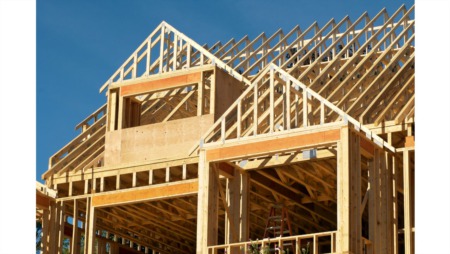
A rough-in is when the mechanical, electrical, and plumbing lines are laid out in a home that is being built. This term is important to know as far as the timeline of how a new-construction build is progressing. It comes after the framing of the home, which is where you can start to see the structure of a home coming together with where the walls will be.
A rough-in includes things like the installation of water and gas lines, electrical wiring (though it will not be connected yet), and the HVAC system and ductwork.
This phase is kind of like putting in the “guts” of the new home, and it must be completed before a builder can move on to things like adding flooring, paint, and appliances. It usually lands somewhere in the middle of the new-home construction process.
Spec home
A spec home is also referred to as an inventory home, according to Garwood. This is a home that a builder begins construction on before it goes under contract—the builder is banking that a homebuyer will materialize at some point during the process.
Quick move-in (QMI) homes are a special type of spec home that will be completed within the next 30 days. These are particularly attractive to buyers who want a new-construction home but don’t want to wait months for a “from scratch” home to be finished.
However, keep in mind that people choosing a QMI or spec home will probably sacrifice some personalized selections in exchange for speed. The choice between building from scratch and a move-in ready home many times is driven by your personal and financial needs.
Walk-through
This is generally one of the final, exciting steps of the new-construction home process. Before closing on the property, a buyer and the builder will usually do a walk-through of the home to conduct a final inspection. The walk-through is just an opportunity for a person to learn how their new home works and to spot items that need to be corrected or adjusted. At this time, a buyer can also ask the builder any questions about the home.


Post a Comment